Hunting the Public Lands Around Miltona and Alexandria: A WMA Guide for Deer Camp
You do not need a lease or a family farm to hunt around Lake Miltona. More than a dozen public parcels sit within about 25 minutes of the cabin, from a 63-acre WMA whose DNR directions start in Miltona to a 1,031-acre pheasant and waterfowl unit in northeastern Douglas County. Here is each one, what it holds, and how to reach it.
Hunting the Public Lands Around Miltona and Alexandria: A WMA Guide for Deer Camp
Most deer camps run on borrowed land: a cousin's forty, a farmer's handshake, a lease that costs more every year. The country around Lake Miltona and Alexandria offers a third option that a lot of visiting hunters walk right past. Douglas County is dotted with Wildlife Management Areas and Waterfowl Production Areas, public ground bought largely with license and stamp dollars, and a camp based in Miltona can reach most of it in under half an hour.
This guide covers the verified parcels closest to the cabin, closest first, with the numbers and directions the DNR itself publishes. Pair it with our plain-English rundown of the 2026 DPA 213 deer regulations, because every acre below sits inside Deer Permit Area 213.
How Much Public Hunting Land Is Near Miltona and Alexandria?
More than most hunters expect. Douglas County sits inside a five-county wetland district with 216 Waterfowl Production Areas totaling 44,499 acres, and Minnesota's WMA system adds 1,521 units statewide. Within about 25 minutes of Lake Miltona alone, this guide counts eleven named WMAs and WPAs open to hunting.
The system works simply. WMAs are state land, marked at entrances and borders with standardized yellow signs, and open to public hunting in the regular seasons unless a unit carries a special designation. WPAs are federal land managed by the U.S. Fish and Wildlife Service out of the Fergus Falls Wetland Management District, bought with Duck Stamp money and managed first for waterfowl. Both ask the same of you: park in the provided areas, hunt the seasons, and check the unit's own detail report for anything unusual.
The parcels at a glance (DNR figures, verified November 8, 2026):
| Unit | Acres | DNR-listed game | Where |
|---|---|---|---|
| Hartfiel WMA | 62.7 | Small game, pheasants, waterfowl | 10-12 min NW of Miltona |
| Schulke WMA | 37.7 | Deer, small game, waterfowl | Same CR 63 corridor as Hartfiel |
| Spruce Creek WMA | 365.4 | Deer, small game, waterfowl, turkey | ~15 min E of Miltona |
| Roger M. Holmes WMA | 1,031.4 | Deer, small game, pheasants, waterfowl, turkey, doves | NE Douglas County, ~20-25 min |
| Belle River WMA (North + South) | 253.4 | Deer, pheasants; the DNR describes the south unit's hunting as mainly waterfowl | South of Carlos |
| Hegg Lake WMA | 380.0 | Deer, small game, pheasants, waterfowl | Near Kensington |
| Herberger Lake WMA | 689.6 | Deer, small game, pheasants, waterfowl | Reached from Osakis |
| Miltona WMA | 106.9 | Deer, small game, forest upland birds, turkey | Reached from Parkers Prairie |
| Walk-In Access 461 | Enrolled private land | See the current WIA atlas | Carlos and Nelson country |
| Larson WPA | Closed to hunting | None, federal rule | Warning only, do not hunt |
What Is the Closest WMA to Lake Miltona?
Hartfiel WMA, 63 acres about 10 to 12 minutes northwest of Miltona. It is the only unit in this guide whose DNR directions start in Miltona itself: 1 mile west on CSAH 14, 3 miles north on MN 29, 1 mile west on CR 63, then a short trail south.
Sixty-three acres is a morning sit or an evening walk, not an all-day range, and that is exactly its value to a cabin camp. The DNR lists Hartfiel for small game, pheasants, and waterfowl (deer is not on its list), so it suits the upland and duck hunters in the crew: slip in for the first and last hours of light and be back for breakfast or supper. Schulke WMA, 37.7 acres listing deer, small game, and waterfowl, sits right beside it on the same CR 63 corridor. The Glenwood area wildlife office, at 320-634-0342, covers these Douglas County units.
Where Can You Hunt Deer and Turkey East of Lake Miltona?
Spruce Creek WMA, 365 acres of aspen, oak, and tamarack swamp along a 1.25-mile stretch of Spruce Creek, roughly 15 minutes east of the lake. Its listed hunting opportunities are deer, small game, waterfowl, and turkey, and the DNR's directions run 4 miles east on CSAH 14 from Miltona, then 2 miles north on County Road 66.
!White-tailed deer buck running through autumn forest

*A whitetail buck in autumn cover, the deer Spruce Creek's aspen and tamarack are managed for. (National Park Service, public domain)*
This is the most complete close-in unit in the guide: big enough to hold deer through the season, wet enough along the creek to interest ducks, and structured like a classic west-central Minnesota mix of upland forest and lowland cover. A DNR forest report on the site describes a 94-acre tamarack swamp and balsam fir lowlands inside and around the unit, the kind of thermal cover whitetails use when the weather turns. One caution: Spruce Creek is also a designated trout stream with a small fisheries area on it. The fishing water is not hunting land, so know where the WMA boundary runs before you walk the creek.
What Is the Biggest Public Hunting Area Near Alexandria?
Roger M. Holmes WMA, 1,031 acres of grassland, wetland, and timber in northeastern Douglas County, roughly 20 to 25 minutes from the cabin. It was created for pheasants, wild turkeys, and waterfowl, its DNR game list also runs to deer, small game, and doves, and 1.4 miles of it borders the Long Prairie River. The DNR's directions run east and south on CSAH 14 from Miltona, then east on CSAH 3.
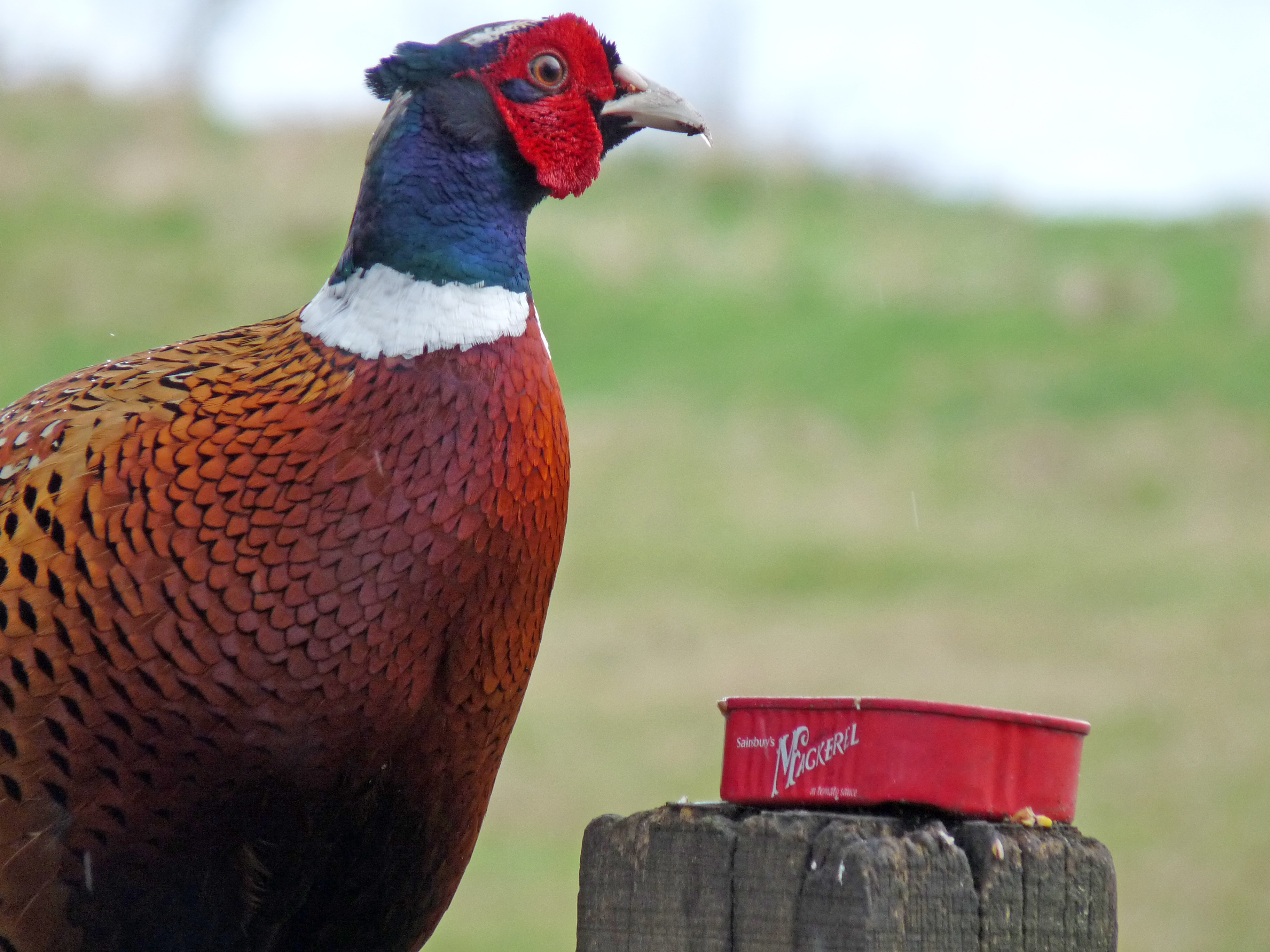
*A ring-necked rooster, the bird Roger M. Holmes WMA was built for. (Photo: nottsexminer, CC BY-SA 2.0, via Wikimedia Commons)*
Holmes is the unit that anchors an upland camp. The Pheasants Forever Build a Wildlife Area campaign assembled it in 2007 and 2008 at a cost of about $1.8 million, and the management has not stood still: state filings list a 50-acre wetland restoration and a 475-acre conservation grazing project on the unit, the unglamorous work that keeps grassland birds on a place year after year. If your group's real love is roosters, our Minnesota pheasant season playbook builds the weekend around ground like this.
Where Are the Best Waterfowl Units?
Start with Belle River WMA south of Carlos, two units totaling 253 acres around two unnamed lakes. The DNR lists deer and pheasants for both units, and its description of the south unit calls the hunting there mainly waterfowl. Then Hegg Lake WMA near Kensington, about 380 acres around a shallow lake in country holding 40 to 60 breeding ducks per square mile.
Belle River splits into a 93-acre north unit with a 62-acre lake and a 160-acre south unit with a 98-acre lake, reached from Carlos by going 2 miles south on CSAH 9 and 1.5 miles east on CSAH 30. A narrow band of upland around the basins adds a nesting strip and a little upland hunting to a mostly waterfowl unit, and a funded 124-acre addition means this WMA is still growing. Hegg Lake is the bigger water: Ducks Unlimited has engineered a water control structure on the lake for the DNR, which tells you the agency manages it as a duck factory first. The Central Zone duck playbook covers dates and limits; these two units are where a Miltona camp puts them to use.
!Male and female mallard ducks on the water

*Mallards, the bread-and-butter duck of the Belle River and Hegg Lake basins. (Photo: ImagePerson, CC BY, via Wikimedia Commons)*
What About the Federal WPAs and the Smaller Units?
The Fergus Falls district pattern runs waterfowl first, with pheasant, turkey, and deer across its units. Orange WPA, just south of Osakis, is the substantial one near the cabin: Ducks Unlimited puts it at 431 acres and restored or enhanced 186 acres across 48 prairie potholes there in 2021. Kensington WPA adjoins Kensington Rune Stone Park to the west, and Forada WPA covers ground in the south county; both sit on the Fish and Wildlife Service's district map, which is the place to confirm their current boundaries.
South toward West Union, Herberger Lake WMA has grown by assembly, a 212-acre tract designated in 2023 next to a 292-acre addition finished in 2021, and the DNR's current listing puts the whole unit at 689.64 acres across Todd and Douglas counties, reached from Osakis. Closer in, two smaller options round out a camp's map. Miltona WMA, 106.9 acres listing deer, small game, forest upland birds, and turkey, is reached from Parkers Prairie, 2.5 miles south on MN 29, whatever its name suggests about where it sits. A Walk-In Access site, number 461, is plotted in the DNR's 2026 atlas in the Carlos and Nelson country east of Miltona. Walk-In Access is private land opened by enrollment: the program runs about 22,000 acres on more than 255 sites statewide, hunts September 1 to May 31, and needs a $3 validation on your license. Sites change year to year, and a site is not open until its boundaries are posted with WIA signs, so hunt it from the current atlas, not from memory.
Is Any Public Land Near Alexandria Closed to Hunting?
Yes, and it catches people out. Larson WPA in Douglas County is closed to hunting under federal rule, even though it looks like every other WPA on the map. Some WMAs also carry refuge or sanctuary designations, so confirm each unit's status on its DNR detail report before you hunt it.
Larson is the named trap, not the only one. Kensington Rune Stone Park, next to the Kensington WPA, is a county park and not hunting land, and Lake Carlos State Park is not general public hunting land either. The rule that keeps a camp legal is boring and absolute: if the unit's own listing does not say it is open, treat it as closed until the area wildlife office says otherwise.
Where Can You Find Maps of These Hunting Areas?
Use the Minnesota DNR's own pages as your single source. Every WMA in this guide has a DNR detail report carrying its official boundary map, acreage, game list, and directions, and each one is linked below, unit by unit. Print or save the unit maps before you leave, because signal gets thin on the back roads.
Your map kit, in order:
- The DNR WMA index and finder, at dnr.state.mn.us/wmas: the master index for every unit in the state.
- Hartfiel WMA, DNR detail report and map: dnr.state.mn.us. Schulke WMA, right beside it: dnr.state.mn.us.
- Spruce Creek WMA, DNR detail report and map: dnr.state.mn.us.
- Roger M. Holmes WMA, DNR detail report and map: dnr.state.mn.us.
- Belle River WMA, DNR detail reports and maps: North unit and South unit, plus the Sauk River Watershed District's Belle River unit map, the clearest single map of that two-unit WMA's basins and access.
- Hegg Lake WMA, DNR detail report and map: dnr.state.mn.us. Herberger Lake WMA: dnr.state.mn.us. Miltona WMA: dnr.state.mn.us.
- The WPA boundaries, on the U.S. Fish and Wildlife Service's Fergus Falls Wetland Management District map: Orange, Kensington, and Forada WPAs, and the district's other federal units.
- The DNR Walk-In Access atlas, at dnr.state.mn.us/walkin, published fresh each year: the only current word on site 461 and its Douglas County neighbors, since enrolled parcels rotate.
- A phone call, when the map and the ground disagree: the Glenwood area wildlife office, 320-634-0342, is the DNR office whose number appears on these units' detail reports.
Sources for this guide: the Minnesota DNR detail report for each unit linked above (acreage, game lists, and directions verified against them on November 8, 2026), the U.S. Fish and Wildlife Service Fergus Falls district map for the WPAs, the DNR's 2026 Walk-In Access atlas, and Ducks Unlimited's June 2026 dedication coverage for Orange WPA's size and restoration work.
Why Base a Public Land Camp at a Cabin?
Because public land hunting is a dawn and dusk game spread across small parcels, and a cabin turns the gaps into the best part of the day. Your group sleeps in one place, cooks real meals between hunts, and nobody drives home in the dark after the evening flight.
Run the math on a firearms weekend. Hartfiel for the close sits, Spruce Creek for a full deer day, Holmes when the upland hunters want roosters, and Belle River when the ducks are moving. When a deer is down, our guide to deer processing near Alexandria points you to Miltona Custom Meats and the other lockers that take a registered deer. The Legendary Log Cabin sleeps 12 in 4 bedrooms plus a main floor sofa bed, with room to spread out gear, an in-unit washer and dryer for the midday laundry cycle, a game room for the evening, and a cedar sauna that seats 6 to 8 for the hunters who sat the coldest stands. Check your season dates and book direct, then spend November hunting public ground like you own it. In the ways that matter at shooting light, you do.